Microsoft Teams Accessibility: Empowering Inclusive Collaboration
At Aria Technologies, we believe that effective communication and collaboration tools should be accessible to everyone. Microsoft Teams offers a comprehensive suite of accessibility features designed to ensure that individuals with disabilities can participate fully and equally in team activities. This guide explores key accessibility functionalities within Microsoft Teams, empowering users to customize their experience and work effectively.
Keyboard Navigation
Microsoft Teams is designed to be fully navigable using a keyboard. This is crucial for users who rely on keyboard-only input due to motor impairments or other disabilities. Users can navigate through the application interface, including chats, channels, settings, and meeting controls, using the Tab key, arrow keys, and other standard keyboard shortcuts.
- Tab Key: Use the Tab key to move forward through interactive elements and Shift+Tab to move backward.
- Arrow Keys: Navigate within lists, menus, and other grouped elements.
- Enter Key: Activate a selected element, such as a button or link.
- Spacebar: Toggle checkboxes or press buttons.
- Ctrl+F6: Move between the main regions of the Teams interface.
Learning and utilizing these shortcuts can significantly enhance productivity and efficiency for keyboard users.
Screen Reader Compatibility
Microsoft Teams offers excellent compatibility with screen readers such as JAWS, NVDA, and Windows Narrator. This allows users with visual impairments to access and understand the content displayed within Teams, including text, images (via alt text), and notifications.
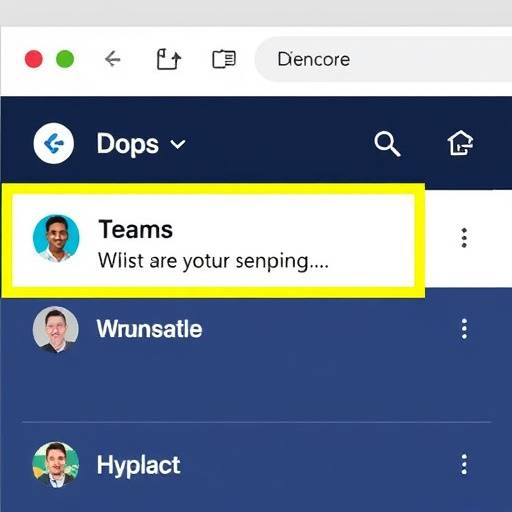
Teams provides descriptive labels for all interactive elements, ensuring that screen readers can accurately convey the purpose and state of each control. This includes buttons, links, form fields, and other UI components. Screen reader users can effectively participate in chats, access files, join meetings, and manage their Teams settings.
To optimize the screen reader experience:
- Enable screen reader mode in Teams settings.
- Use descriptive alt text for images shared in Teams.
- Familiarize yourself with Teams' keyboard shortcuts for efficient navigation.
Captioning
Captioning is a vital accessibility feature that provides text transcripts of spoken content in meetings and videos. Microsoft Teams offers both live captions during meetings and the ability to add captions to recorded meetings.
- Live Captions: Enable live captions during a meeting to display real-time text of what participants are saying. This is beneficial for individuals who are deaf or hard of hearing, as well as those in noisy environments.
- Uploaded Captions: Teams allows you to upload caption files (e.g., .srt, .vtt) to recorded meetings. This ensures that recordings are accessible to a wider audience.
- Automatic Captions: Teams offers automatic captioning, which uses AI to generate captions in real-time. While not always perfect, automatic captions provide a valuable baseline for accessibility.
To enable live captions during a meeting, select "More actions" (...) in the meeting controls and choose "Turn on live captions."
Visual Adjustments
Microsoft Teams offers several options for visual customization, allowing users to adjust the appearance of the application to suit their individual needs and preferences.
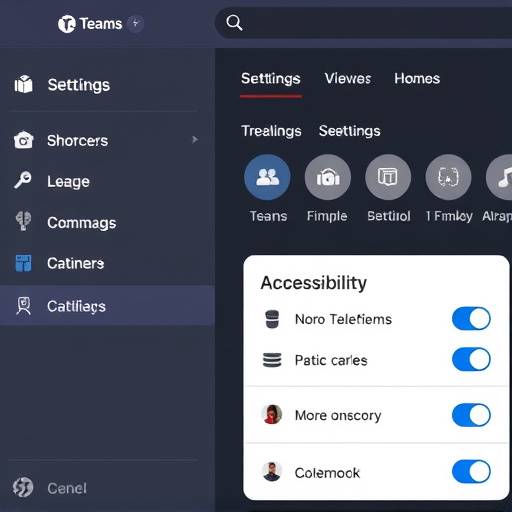
- High Contrast Mode: Enable high contrast mode to increase the contrast between text and background elements, making it easier to read for users with low vision or visual impairments.
- Zoom: Use the zoom feature to increase the size of text and other elements on the screen.
- Dark Theme: Switch to the dark theme to reduce eye strain, especially in low-light environments.
- Focus Mode: Reduce distractions and emphasize content by using focus mode.
These visual adjustments can significantly improve the usability and comfort of Teams for users with a variety of visual needs.
To access visual adjustment settings, navigate to "Settings" > "General" > "Theme" or "Accessibility."
Additional Accessibility Considerations
Beyond the core features outlined above, several other aspects of Teams contribute to its accessibility:
- Notifications: Teams provides customizable notification settings, allowing users to choose how they are alerted to new messages and activities. Ensure that notifications are configured in a way that is accessible and non-disruptive.
- File Sharing: When sharing files in Teams, ensure that they are accessible to all users. This includes providing alternative text for images, using clear and concise language, and structuring documents logically.
- Meeting Etiquette: Promote inclusive meeting practices by encouraging participants to speak clearly, avoid talking over each other, and describe any visual content they are sharing.
Aria Technologies is committed to providing accessible and inclusive technology solutions. We believe that everyone should have the opportunity to connect, collaborate, and communicate effectively, regardless of their abilities. Microsoft Teams, with its robust accessibility features, plays a crucial role in achieving this goal.
For further assistance or to report any accessibility issues, please contact our support team at accessibility@ariatech.com or call us at (415) 555-2020. Our office is located at 555 California Street, Suite 100, San Francisco, CA 94104.